How Much Does an Electrical Panel Upgrade Cost in New Jersey?
Most electrical panel upgrades in New Jersey cost between $2,000 and $7,000. A straight swap to a new 200-amp panel sits near the low end, while a full service upgrade with a new meter box, new outside power cable and extra work an older home needs to pass inspection sits near the top. Spartan Home Pros gives you one flat price before any work starts, pulls the township permit, and includes whole-home surge protection on every panel job. Call or text (908) 287-2187.
This guide covers everything a New Jersey homeowner usually asks before a panel upgrade: the warning signs, what drives the price, 100 amps versus 200 amps, permits and the utility, what happens on the day, and the mistakes that cost people money.
In this guide
Signs your panel needs an upgrade
Your electrical panel is the gray metal box, usually in the basement or garage, where the breakers live. It sends power to every room in the house. Most people never think about it until something goes wrong. These are the signs we see most often in New Jersey homes:
- You still have a fuse box. Fuse boxes were common in homes built before the 1960s. They were never made for today’s kitchens, air conditioning and electronics. See our page on fuse box replacement.
- The panel is a brand with a bad track record. Federal Pacific and Zinsco panels are known for breakers that may not shut off when they should. Many insurers and home inspectors flag them on sight.
- Breakers trip often or will not reset. A breaker that trips now and then is doing its job. One that trips every time the microwave and toaster run together is telling you the panel is out of room.
- Heat, a burning smell or scorch marks. A panel cover that feels warm, a buzzing sound, or brown marks around a breaker mean you should call right away. A burned panel is an emergency, not a weekend project.
- Lights dim or flicker when the air conditioning, well pump or dryer kicks on.
- No room for new circuits. If you are adding central air, a hot tub, an EV charger, a generator or a finished basement, there may be no space left in the panel.
- Rust or water inside the box. Basements that flood and homes near the shore see more rust. Rust inside a panel shortens its life.
- You are buying or selling a house and the home inspection report calls out the panel.
Not every one of these means a full upgrade. Sometimes a single bad breaker or a loose wire is the real problem, and we will tell you that. For a longer list, read 7 signs you need to replace your electrical panel.
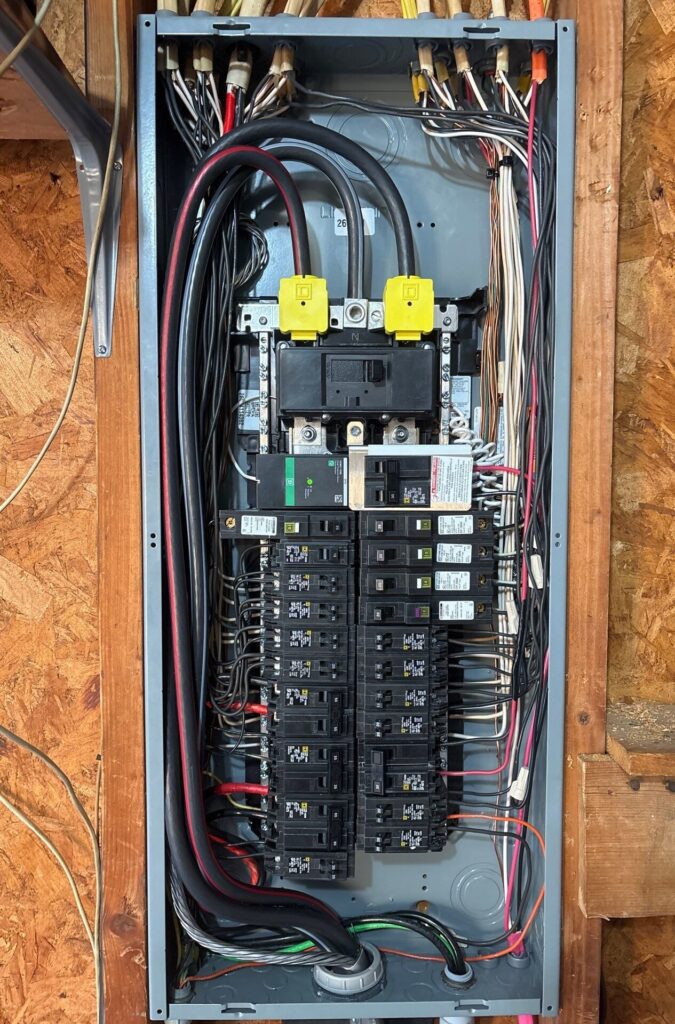
What a panel upgrade costs in New Jersey
Here are the prices homeowners see from us. You always get the exact number in writing before we start, with no hourly meter running.
What your panel upgrade costs depends on a handful of things:
- How much power you are going to. Moving from 100 amps to 200 amps is the most common upgrade we do. Going to 300 or 400 amps for a large home costs more.
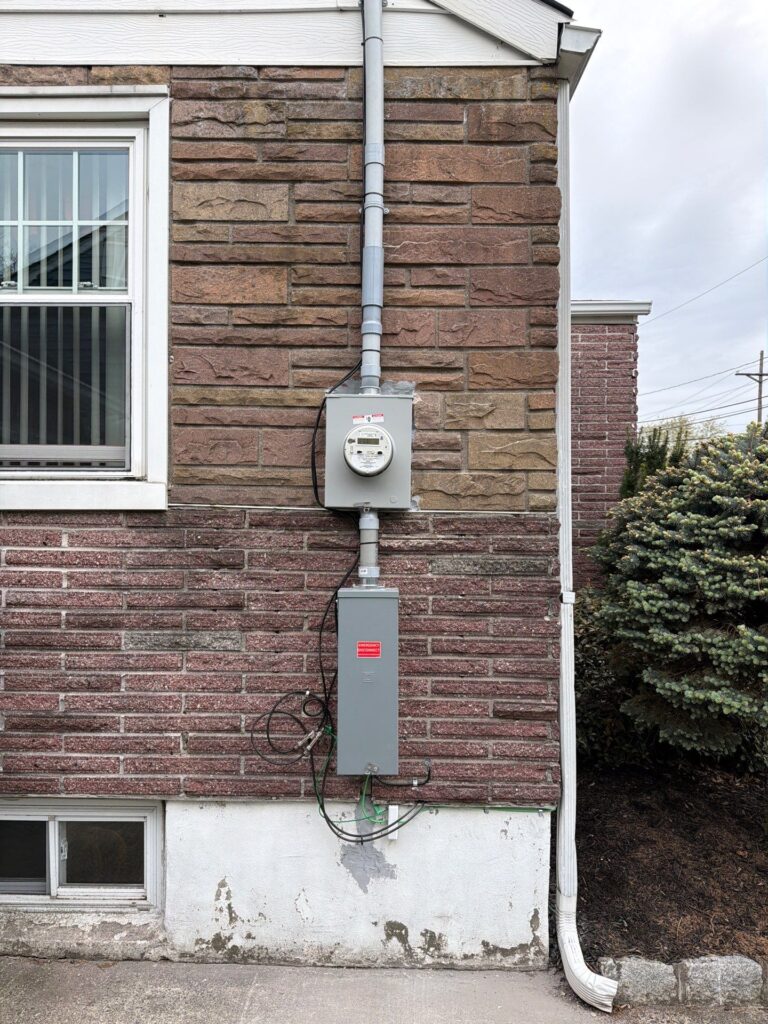
- Panel only, or the whole service. Swapping just the panel costs less than also replacing the meter box and the thick power cable that runs down the outside of the house from the utility’s wires.
- What the inspector needs to see. Older homes may need new grounding, newer safety breakers in some rooms, or fixes to aluminum wiring before the township signs off.
- Where the panel sits. Moving a panel out of a closet or bathroom, or a tight finished basement, adds time.
- Utility work. If the utility has to change the line to your house, scheduling with PSE&G or JCP&L can add steps.
Surge protection is not an extra on our quotes. The code New Jersey uses requires it when a home’s service is replaced, so every panel we install gets a whole-home surge protector. Learn more about whole-home surge protection.
100 amps or 200 amps: which do you need?
Think of amps as the size of the pipe bringing power into your house. Many older New Jersey homes still have 100 amps. That can be enough for a smaller home with gas heat, a gas stove and no big add-ons.
200 amps is the standard for most homes today. It is the right choice if you have, or plan to add, any two of these: central air, an electric range or dryer, a heat pump, a hot tub, an EV charger, or a finished basement with its own heat. Very large homes, or homes with two EV chargers and electric heat, may need more than 200 amps.
We do not guess. Before we quote, we add up what your home actually uses and what you plan to add, then size the panel to match. Sometimes the honest answer is that you do not need a new panel at all, just a smaller fix.
Permits, inspections and your utility in New Jersey
A panel upgrade always needs an electrical permit in New Jersey. The permit is filed with your township’s construction office, and a township electrical inspector checks the work before the job is closed. We file the permit, meet the inspector and give you the approval when it passes. Keep that paper. Your insurance company, and a buyer’s home inspector years from now, may ask for it.
New Jersey follows the 2020 National Electrical Code for electrical work (N.J.A.C. 5:23-3.16). Two rules in that code change what a panel upgrade looks like today:
- Surge protection. A home’s service needs a surge protector, including when the service is upgraded or replaced.
- An outdoor emergency shut-off. Houses need a clearly marked shut-off switch outside so firefighters can cut the power without going in. On many upgrades this is built into the new meter box or mounted right next to it.
The utility. Your power company has to shut off and later restore power at the meter. Most of New Jersey is served by PSE&G or JCP&L. PSE&G will not set a meter or reconnect service until the town inspector approves the work and issues what the utility calls a cut-in card, and it says residential service requests can take up to six weeks (PSE&G). We handle the scheduling on both sides so you are not stuck in the middle.
How long a panel upgrade takes
The work itself is usually done in one day. Your power is off for part of that day, typically several hours, while the old panel comes out and the new one goes in. A full service upgrade that also replaces the meter box and outside cable can stretch into a second day.
The calendar time around the job is what varies. Getting the permit, lining up the inspection and booking the utility can take from a few days to a few weeks depending on your township and whether the utility has to change anything at the street. We give you a realistic date when you approve the quote.
What happens on upgrade day, step by step
- We arrive and protect your home. Floor covers go down and we walk through the plan with you.
- Power goes off. We shut off the main, and the utility pulls or disconnects the meter if the job calls for it. Plan for no lights, no outlets and no well pump during this part.
- The old panel comes out. Each circuit is tagged so it goes back to the right breaker.
- The new panel goes in with new breakers, the surge protector and proper grounding. If the meter box or outside cable is being replaced, that happens now too.
- Every circuit is reconnected and labeled with a clear, typed directory on the panel door.
- Power comes back on. Where the utility has to reconnect, it does so once the township has signed off. We test the panel and walk around the house with you.
- Clean-up and inspection. We leave the work area as we found it, then meet the township inspector and send you the approval.
“Amazing customer service and work. Done in a very timely manner. In contact the entire time. Work is super professional and clean. Amazing job getting us up to date and back up and running in few hours. Whole new panel. …”
Rebates and ways to pay
We are not aware of a New Jersey or utility rebate for a panel upgrade on its own. There is one common exception: if the upgrade is needed to add a home EV charger and you are a PSE&G customer, PSE&G’s EV program offers an on-bill credit of up to $1,500 per charger for work on your side of the meter, with conditions like an ENERGY STAR certified smart charger, a New Jersey licensed electrician and a passed township inspection (PSE&G EV program). Programs change, so ask us before you sign anything and we will check what applies to your address.
Financing is available, so a panel that needs to be done now does not have to wait.
Common mistakes to avoid
- Skipping the permit. Unpermitted panel work is one of the items that comes up most when a house is sold, and it can give an insurer a reason to push back on a claim.
- Buying the cheapest quote without reading it. Ask if the price includes the permit, the surge protector, the outdoor shut-off and the inspection. Low quotes often leave those out.
- Sizing for today only. If an EV, heat pump or generator is in your next five years, plan the panel for it now. Doing it twice costs more.
- Waiting on a warm or burned panel. Heat and scorch marks get worse, not better. Turn off the main if you can do it safely, and call.
- Letting a handyman do it. In New Jersey, electrical work done for pay takes a licensed electrician. A handyman panel swap can fail inspection and leave you paying twice.
Why homeowners across New Jersey call Spartan Home Pros
We are a licensed and insured electrical, heating and air conditioning company with our own crews, never subcontractors. You get a flat price before we start, our team answer the phone 24/7, and 500+ five-star Google reviews show how we treat your home. Our Lifetime Craftsmanship Guarantee covers the work we do inside your home. We are also a Tesla Certified Installer, an authorized Generac installer and a certified ChargePoint and Emporia installer, so if your new panel is making room for a charger or a generator, one crew can plan it all. See our panel upgrade service page for more.
Panel Upgrades in Basking Ridge, Warren, Berkeley Heights and Nearby Towns
The prices above are what homeowners pay across our Somerset, Morris and Union County service area, and every upgrade comes with a written flat price first.
Our Bridgewater office handles panel upgrades in Bernards Township (Basking Ridge, Liberty Corner and Lyons), Bedminster and Pluckemin, Warren, Bridgewater and Martinsville, Chester, and Long Valley in Washington Township. Call or text (908) 287-2187.
Our Chatham office covers panel upgrades in Long Hill Township (Millington, Stirling, Gillette and Meyersville), Berkeley Heights, Murray Hill and New Providence. Call or text (908) 493-9223.
Questions homeowners ask about panel upgrades
How much does an electrical panel upgrade cost in New Jersey?
Every panel upgrade gets a flat price after we see your panel. A straight swap to a new 200-amp panel is near the low end. A full service upgrade that also replaces the meter box and the outside power cable, or an older home that needs extra fixes to pass inspection, is near the top. We give you one flat price in writing before any work starts.
Do I really need a panel upgrade?
Not always. If the panel is simply full, or one breaker is bad, a smaller fix may solve it. The real reasons to upgrade are a fuse box, a Federal Pacific or Zinsco panel, a panel that is hot, rusted or burned, or a home that does not have enough power for what you are adding, like central air or an EV charger. We will tell you honestly which one you have.
Is 100 amps enough, or do I need 200 amps?
100 amps can be enough for a smaller home with gas heat and a gas stove. If you have or plan to add two or more big users of power, like central air, an electric range, a heat pump, a hot tub or an EV charger, 200 amps is the safer choice. We add up your home’s actual needs before we recommend a size.
Do I need a permit to upgrade my electrical panel in New Jersey?
Yes. A panel upgrade always needs an electrical permit from your township’s construction office and an inspection when the work is done. We file the permit, meet the inspector and give you the approval. Keep it for your insurance company and for when you sell the house.
How long does a panel upgrade take?
The work is usually done in one day, and your power is off for part of that day. A full service upgrade with a new meter box can take a second day. Lining up the permit, inspection and utility can add a few days to a few weeks before the job date.
Why is surge protection part of every panel upgrade?
New Jersey follows the 2020 National Electrical Code, which requires a surge protector for a home’s electrical service, including when the service is upgraded or replaced. The inspector will look for it, so we include it on every panel job. It also helps protect your appliances, TVs and computers from power spikes.
Will a new panel lower my electric bill?
No. A panel sends power around the house; it does not change how much you use. What a new panel gives you is room for what you want to add, newer safety breakers, and a panel that home inspectors and insurers will not flag.
Can I stay home during a panel upgrade?
Yes. Most families stay home. Just plan for the power to be off for several hours. Charge your phones, keep the fridge closed, and if you have a well or a sump pump, let us know so we can plan around it.
When should I upgrade my electrical panel?
Consider an upgrade if your panel is 60 or 100 amps, uses fuses, has no room for new breakers, or is a brand known for problems. Adding an EV charger, a heat pump or a hot tub often means an upgrade too. Every panel upgrade gets a flat price after we see your panel. Signs you need a new panel.
Is my breaker bad?
Usually not. The idea of a “bad breaker” comes from the days of fuses, when people changed blown fuses all the time and some put in bigger fuses to keep the power on, which let wires overheat and ruined circuits. Today’s breakers rarely go bad, but the habit of blaming the breaker stuck around. A professional electrician finds out why it’s tripping.
Ready for a flat price on your panel upgrade? Call or text Spartan Home Pros at (908) 287-2187. Calls are answered 24/7, and we serve homeowners across Monmouth, Middlesex, Somerset, Union and Morris counties.