Backup Generator Guide: How a Standby System Actually Goes In
A backup generator, also called a home standby generator, is a permanent backup power unit that sits outside on a pad, runs on natural gas or propane, and turns on by itself within seconds of a power outage. Many New Jersey homes are covered by a unit around 20 to 26 kW for the whole house, while a smaller unit around 10 to 18 kW can run just the essentials like heat, the fridge, the sump pump and some lights. The price depends on the size, the fuel hookup and the wiring, so it is quoted after a visit, and the job needs township permits and inspections. Spartan Home Pros is an authorized Generac installer. Call or text (908) 287-2187. Ready to have one put in? See our whole house generator installation service.
This guide covers what New Jersey homeowners ask before buying one: whether you need it, standby versus portable, sizing, what drives the cost, fuel, placement, permits, how long it takes, upkeep and the mistakes we see most.
In this guide
- Do you need a standby generator?
- Standby or portable
- What size backup generator do you need?
- What drives the cost
- Natural gas or propane
- Where it can go
- Permits, inspections and safety
- Rebates and incentives
- How long it takes and what happens
- Owning a generator
- Common mistakes to avoid
- Questions homeowners ask
Do you need a standby generator?
Not every home does. A standby generator is worth a serious look if any of these sound like your house:
- You lose power often, or for a day or more at a time, after storms, snow or high winds.
- You have a sump pump. A basement that floods when the power is out is the most expensive outage there is.
- You are on a well. No power means no water, no flushing and no showers.
- Someone at home depends on medical equipment, or you have older family members who cannot handle a cold or hot house.
- You work from home and cannot afford to lose internet and a desk for a day.
- You travel and want the house protected when nobody is there to start a portable.
Much of our area is fed by overhead lines that run through heavy tree cover. In towns like Mendham, Harding, Chester, Far Hills, Watchung and Colts Neck, outages are not unusual and not always short. That is why standby generators are one of the most common jobs we do in those towns.
Standby or portable generator?
A portable generator is wheeled out, filled with gasoline and started by hand. With a generator inlet and an interlock kit at the panel, it can safely power the circuits you pick. It is the lower-cost answer and it works, as long as you are home, awake and willing to go outside in the weather that caused the outage. Never run one in a garage or near an open window.
A standby generator is permanently installed, runs on natural gas or propane, tests itself on a schedule and starts on its own. You do not have to be home. For most people who call us, that is the whole point.
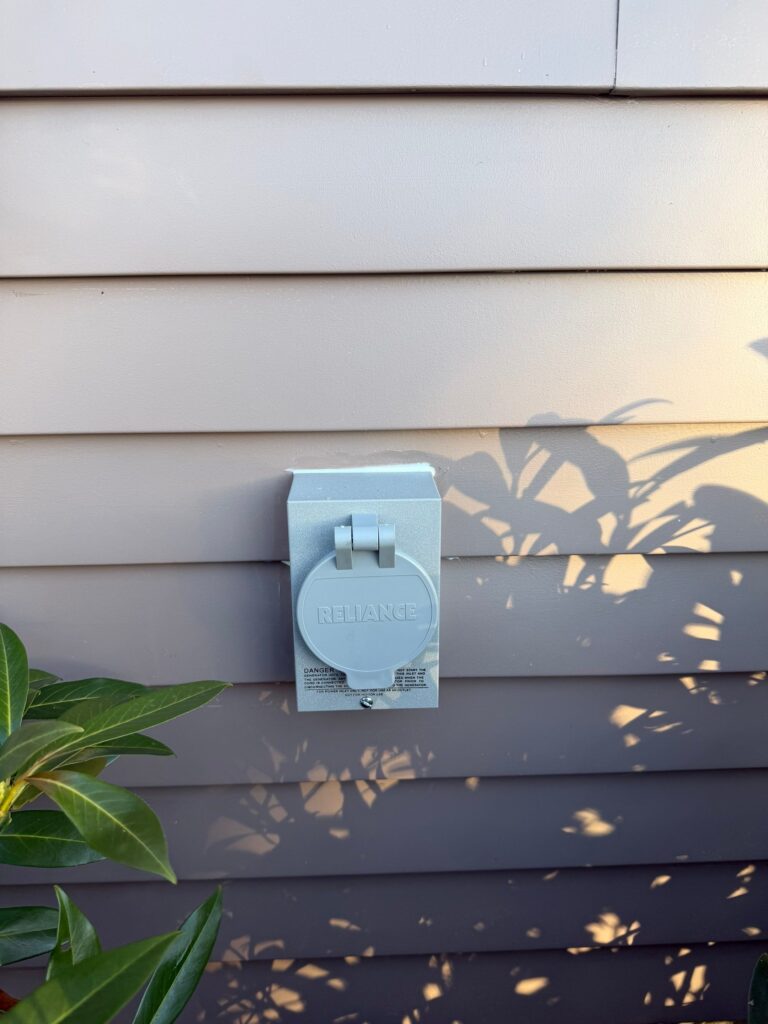
A More Economical Option: Generator Interlock Kit
If a standby system is more than you want to spend, there is a middle path that still keeps you safe. An interlock kit is a small metal plate added to your panel, paired with a weatherproof inlet on the outside wall. Your portable generator plugs into the inlet, and the plate makes sure the main breaker and the generator breaker can never be on at the same time, so no power can flow back onto the street lines.
- Far lower cost. No concrete pad, no gas line and no automatic transfer switch.
- You choose the circuits. Run the furnace, refrigerator, sump pump and a few lights, and leave the rest off.
- Quick to install. Most jobs take one visit, and we handle the permit and inspection.
The tradeoff is the same as any portable: someone has to be home to set it up and refuel it. For many families that is a fair trade for an efficient, budget-friendly backup. Our generator interlock kit installation page explains how it works and what size generator to use.
What size backup generator do you need?
Generators are sized in kilowatts, or kW. The right size comes from one question: what do you want running when the power is out?
- Essentials only. Heat, the refrigerator, the sump pump, the well pump if you have one, some lights and outlets, and the internet. This is often a unit around 10 to 18 kW and costs less.
- The whole house. Everything, including central air and the kitchen, as if nothing happened. For many New Jersey homes this means roughly 20 to 26 kW. Larger homes with electric heat or several air conditioners can need more.
The biggest users are central air, electric heat or a heat pump, a well pump, an electric range or dryer, and an EV charger. Motors like an air conditioner or well pump also need a burst of extra power for a moment when they start. Sizing without counting that burst is the most common mistake, and it leaves you with a generator that stalls when the AC turns on.
A smart load manager can help. It switches big items like the air conditioner or dryer off for a moment when the generator is busy, so a smaller unit can still cover most of the house. We walk your panel with you, add up what you want covered, and price both options. For more detail, read what size whole-home generator you need.
What drives the cost of a backup generator in New Jersey
Generator installs are quoted after we see the property, because the price is driven by things a phone call cannot answer. Here is what moves the number:
- The size of the unit. Bigger generators cost more to buy and need more fuel.
- The transfer switch. A switch that carries the whole house costs more than one for selected circuits.
- The gas hookup. A short run from the gas meter is simpler than a long one. If the gas meter is too small to feed the generator and the house at the same time, the gas company may need to upgrade it.
- Propane. If there is no natural gas, a propane tank has to be sized, placed and filled.
- Distance and the path. The farther the generator sits from the panel and gas meter, the more pipe and wire the job needs.
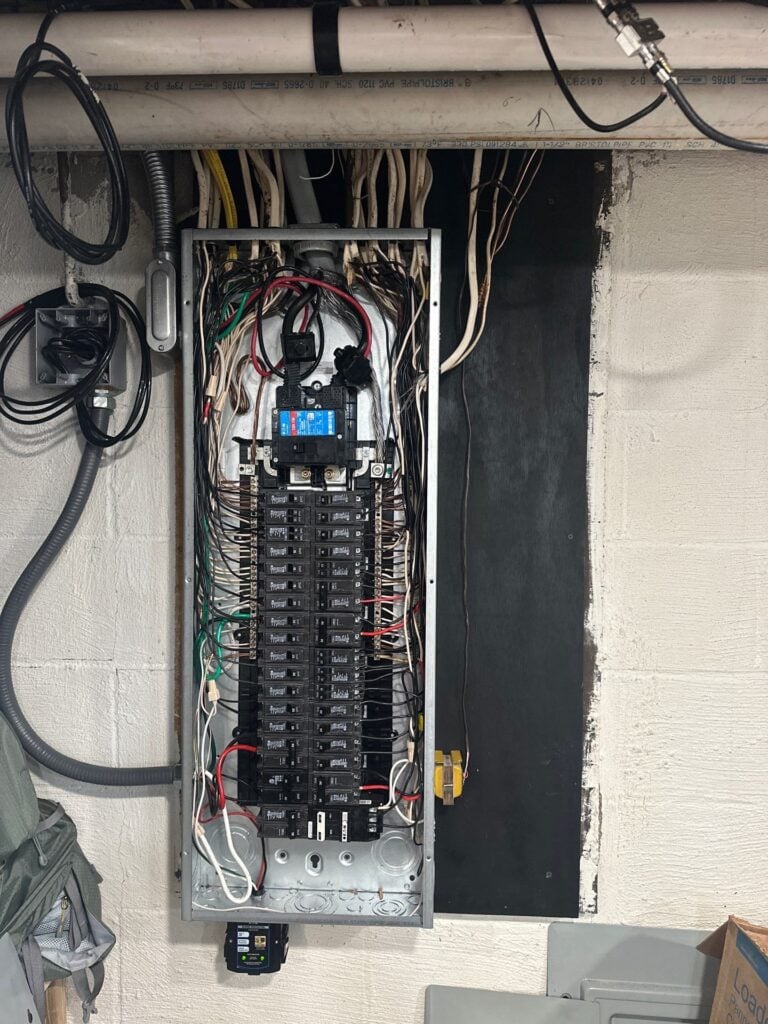
- Your electrical panel. An old or full panel may need work first. See our complete guide to panel upgrades in New Jersey.
- The pad, permits and inspections. These are part of every proper install.
You get one written price before anything is ordered. Financing is available.
Natural gas or propane?
Natural gas is the easy choice if your street has it. There is no tank and nothing to refill, and it keeps running as long as the gas does. The gas line to the generator usually has to be sized for it, and the gas meter may need an upgrade from the gas company.
Propane means a tank on your property, and it is the answer where there is no gas line. Out in Mendham, Chester, Harding and the western Somerset towns, propane is common and a tank is often already there. The tank has to be big enough to keep the generator running through a long outage, so we check it before we pick the unit.
Where can a backup generator go?
A generator is an engine, and its exhaust has to stay away from your home. Generac’s guidance, based on national fire safety standards, calls for at least 5 feet from windows, doors, vents and window wells, 3 feet of open space in front and at the ends, 5 feet of open space above, and, for many models, at least 18 inches between the back of the unit and the house wall (Generac). Your township may add its own rules on how close it can sit to the property line.
It also needs to be close enough to the gas meter and the panel to keep the runs short, and easy to reach for service. Getting the spot wrong is a common reason an install fails inspection, so we settle it before anything is ordered.
Permits, inspections and safety in New Jersey
A standby generator needs an electrical permit and, for the gas line, a plumbing permit, both filed with your township’s construction office. Many towns also review where the unit sits. Each permit ends with an inspection. We file them, meet the inspectors and give you the approvals when they pass. Unpermitted generator work tends to come up when the house is sold.
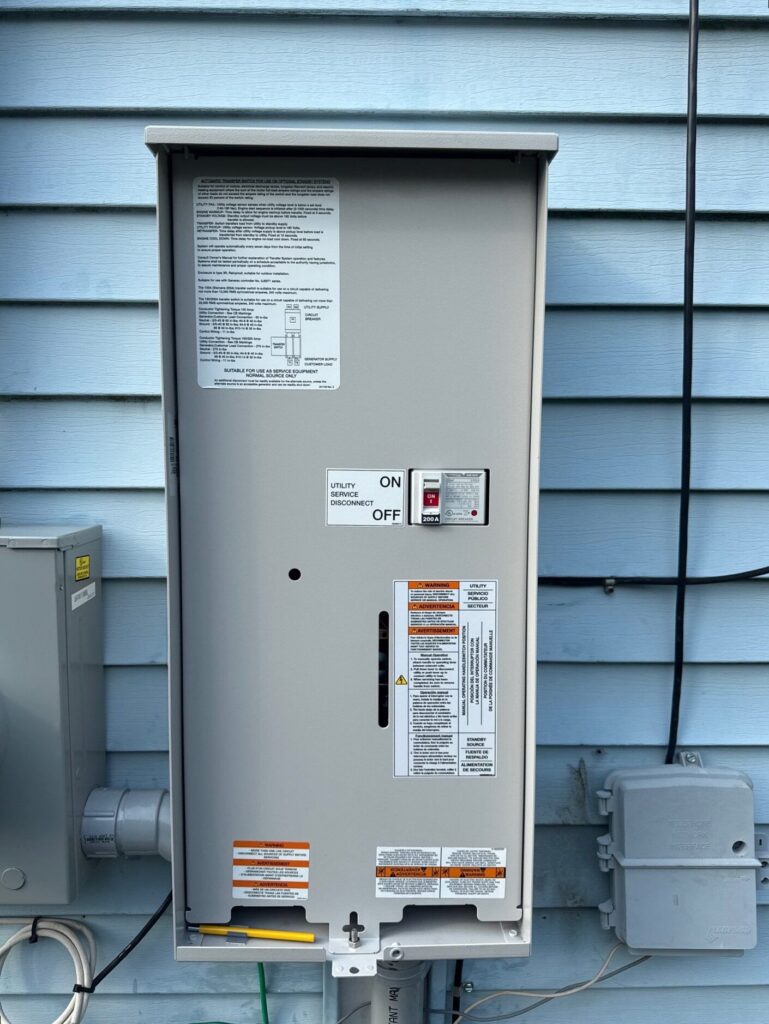
The transfer switch is the safety part. When the power goes out, it disconnects your house from the utility lines, starts the generator and feeds your home. When utility power comes back, it switches back and shuts the generator down. The disconnecting matters as much as the connecting. Without it, a running generator can send power back down the lines to the utility crews working on them.
Rebates and incentives for generators
We are not aware of a current New Jersey or utility rebate for home standby generators. If you are comparing a generator with battery backup, like a Tesla Powerwall, ask us. We are a Tesla Certified Installer, and battery programs change, so we will check what applies to you. Read more about Tesla Powerwall battery backup.
“Al was the electrician that came out. I had a weird problem with half of my house losing electricity after a storm. He explained it all and patiently answered my 100 questions. …”
How long it takes and what happens on install day
Most of the calendar time is ordering the generator, getting permits and, for natural gas, any work the gas company has to do. The work at your house is usually a day or two. Here is what happens:
- Set the pad. The generator sits on a level pad in the spot we agreed on, at the right distance from windows, doors and vents.
- Place the generator on the pad.
- Install the transfer switch next to your meter or panel and wire it in. Your power is off for part of the day while we do this.
- Run the wiring between the generator and the transfer switch.
- Connect the fuel. A licensed plumber runs and tests the gas line, or the propane company connects the tank.
- Start-up and testing. We start the generator, cut the utility power on purpose to test it, and make sure it picks up the house and switches back.
- Walk-through and inspections. We show you how it works, set up the app if it has one, and meet the inspectors.
What owning a standby generator is like
- It runs itself for a few minutes on a schedule, often weekly, to stay ready. You will hear it, and so might your neighbors.
- It needs service about once a year, like any engine: oil, filters, spark plugs and a check of the battery.
- The battery that starts it is the most common failure. A dead battery means no start when you need it, so replace it on a schedule.
- Add whole-home surge protection if you do not have it. The switch back to utility power is exactly when a spike can show up.
Common mistakes to avoid
- Buying on size alone. A unit sized without counting the startup burst of the AC or well pump will stall when you need it most.
- Forgetting the gas meter. If the meter cannot feed the generator and the house together, the generator will not run right. Check before you buy.
- Picking the spot for looks. Too close to a window, door or vent means a failed inspection and a move.
- Backfeeding with a cord. Plugging a portable into a dryer outlet is against code and dangerous for you and the line crews. Use an inlet and interlock, or a transfer switch.
- Skipping maintenance. Most generators that fail in a storm fail because of a dead battery or no service.
Why homeowners across New Jersey call Spartan Home Pros
We are a licensed and insured electrical, heating and air conditioning company and an authorized Generac installer, with our own crews, never subcontractors. You get a flat price in writing before anything is ordered, our team answer the phone 24/7, and 500+ five-star Google reviews back us up. We handle the permits and inspections, and if your panel needs work to carry a generator, the same crew takes care of it. See our generator installation service page for more.
Questions homeowners ask about standby generators
How much does a standby generator cost to install in New Jersey?
It is quoted after we see your property, because the price depends on the size of the unit, the transfer switch, how far the generator sits from the panel and gas meter, whether the gas meter or your panel needs work, and the pad, permits and inspections. You get one written price before anything is ordered, and financing is available.
What size generator do I need for my house?
It depends on what you want running. Many New Jersey homes are covered by a unit around 20 to 26 kW for the whole house, including central air. A unit around 10 to 18 kW can usually run the essentials: heat, the refrigerator, the sump pump, a well pump, some lights and outlets. We add up your actual needs, including the startup burst of the air conditioner or well pump, and price both options.
Do I need a permit for a standby generator in New Jersey?
Yes. You need an electrical permit and, for the gas line, a plumbing permit from your township’s construction office, and many towns also review where the unit sits. Each permit ends with an inspection. We file them, meet the inspectors and hand you the approvals.
Should I get a standby or a portable generator?
A portable generator costs less and, with an inlet and interlock kit at the panel, can safely power the circuits you choose, but you have to be home to set it up and fuel it. A standby generator is permanent, runs on natural gas or propane and starts by itself within seconds, even when you are away.
Is natural gas or propane better for a generator?
Natural gas is simplest if your street has it, since there is nothing to refill. The gas line and sometimes the gas meter need to be sized for the generator. Propane works where there is no gas line, but it needs a tank big enough to carry you through a long outage.
How close to the house can a standby generator be?
Generac’s guidance calls for at least 5 feet from windows, doors, vents and window wells, 3 feet of open space in front and at the ends, 5 feet above, and for many models at least 18 inches from the house wall. Your township may add its own rules, so we confirm the spot before ordering.
What is a transfer switch and why do I need one?
The transfer switch disconnects your house from the utility lines when the power goes out, starts the generator and feeds your home, then switches back when utility power returns. It keeps your generator from sending power back down the lines to the crews working on them, and it is required for a safe, legal install.
How much maintenance does a standby generator need?
It runs itself for a few minutes on a schedule, often weekly, and needs service about once a year: oil, filters, spark plugs and a battery check. The starting battery is the most common failure, so replace it on a schedule rather than finding out during a storm.
How do I hook up a generator to my house?
The safe way is a transfer switch or an interlock kit installed by a licensed electrician, plus a proper inlet outside for the generator cord. This keeps your generator’s power from going back out on the street lines. About generator interlock kits.
Can I connect a generator to my house without a transfer switch?
No. Plugging a generator into a wall outlet can send power back onto the utility lines and seriously hurt line workers or neighbors. It can also burn up your wiring. Always use a transfer switch or interlock installed by an electrician.
Do I need a permit to install a generator in New Jersey?
Yes. A standby generator needs town permits and inspections, and usually a gas hookup. We handle the permits as part of the job.
Is a portable generator a good alternative to a standby generator?
Yes. A portable generator with an interlock kit is a great economical alternative. The interlock kit lets you safely power your essentials, like the fridge, furnace, lights and outlets, straight through your panel. We install interlock kits along with the outdoor inlet for the generator cord.
Ready to stop worrying about the next outage? Call or text Spartan Home Pros at (908) 287-2187 for a written price on a standby generator. Calls are answered 24/7, and we install generators across Monmouth, Middlesex, Somerset, Union and Morris counties.